Showing posts with label Laos. Show all posts

Tuesday, November 21, 2006

Vientiane -- A Relaxing Town


This is the tenth and final chapter of our Laos journey.

To complete our time in Laos, we spent one day in the capital, Vientiane (pronounced "Wiang Chan"). A pleasant city situated on the Mekong River, we found Vientiane to fit with the understanding of Laos we had developed over the week: similar to Thailand in many ways, but calmer and more expensive.

We spent several hours at the Lao National Museum, focusing on the exhibits that included English labels but paying some attention to the Thai and French as well. Most fascinating was the emphasis on the "greatness" of Communism and the strong antipathy towards the "American imperialists." After reading label after label decrying the actions of the United States during the 1970s – most of the strong language probably deserved, though not what I’d expect to find in a historical museum – I began to feel a bit uneasy about my own presence in the country. It was a strange – not fearful, but maybe a little guilty – feeling. I’m very glad we got to see it, though, because I think it was an experience I couldn’t have had elsewhere.

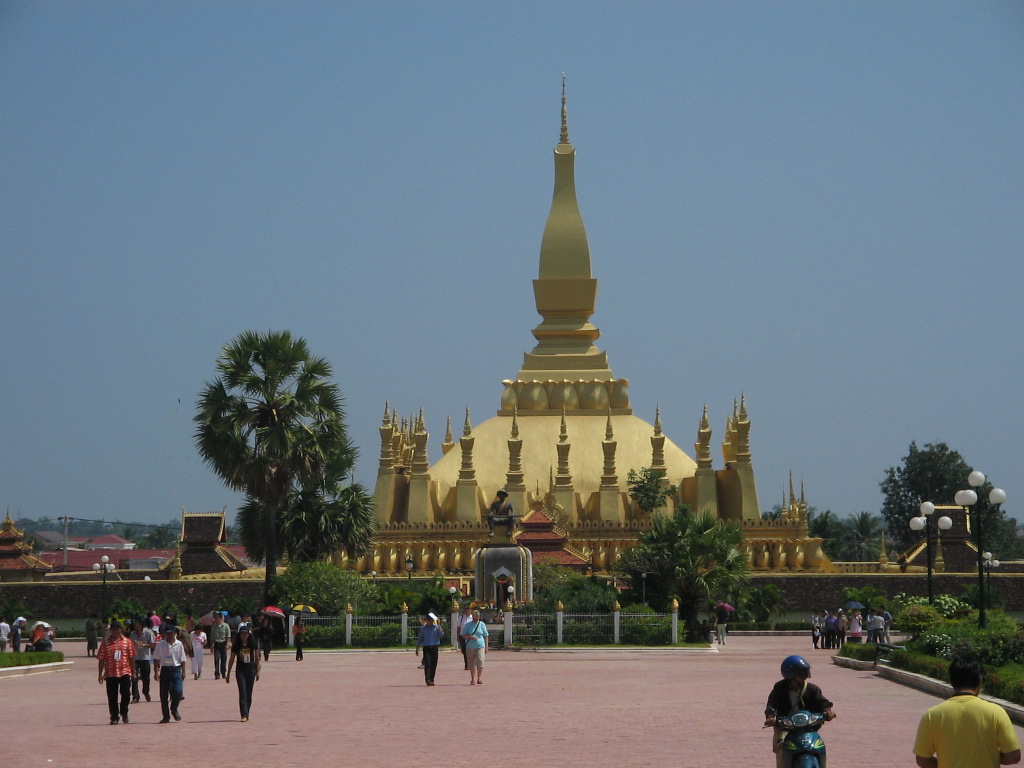
We also visited Laos’s most important temple, Wat Pathat Luang. The gold lotus glinting in the sunlight was hot, but it was fun to see a different design style than we usually find in Thailand. Two major tourists sites were enough for us for one day, though, so we spent the remainder of our time strolling the parkway along the river, eating baguettes, reading, and enjoying one last Beer Lao. It was a true vacation.

Thursday, November 16, 2006

A Day on a Laos Highway


This is Chapter 9 of our Laos journey.

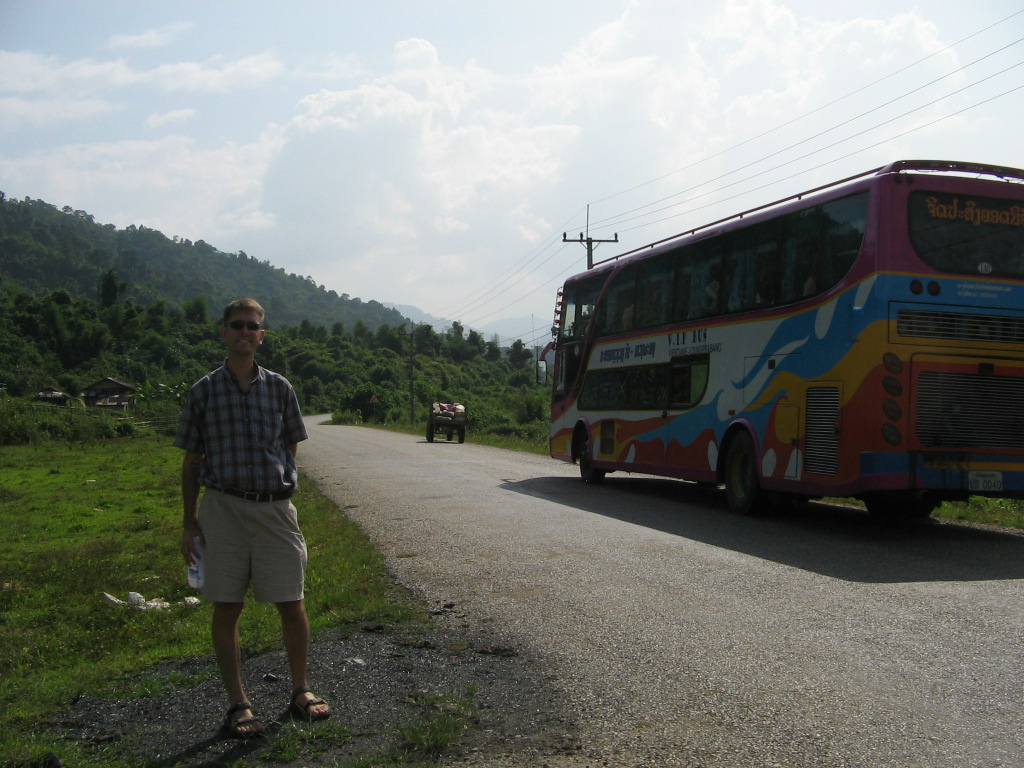
After two lovely full days in Luang Prabang, on Friday morning we boarded a "VIP" bus for the day-long journey to Vientianne, the current capital of Laos. Many people make this journey overnight, but I have to say they don’t know what they are missing. This bus ride – despite the occasional engine caught fire or delay at a police station – was one of the highlights of our trip, and as I sit at my computer several weeks later thinking back on Laos, it is those images we saw from windows of the bus that feature most prominently in my memories.

After leaving the city of Luang Prabang, the bus climbed high and then higher, and higher, and higher. Soon we were above the clouds – at least the low-level mountain clouds – and there we stayed, for five hours, winding our way very slowly and carefully along ridges. We’d look down into huge valleys, sometimes on either side, and marvel at the wildness of it.

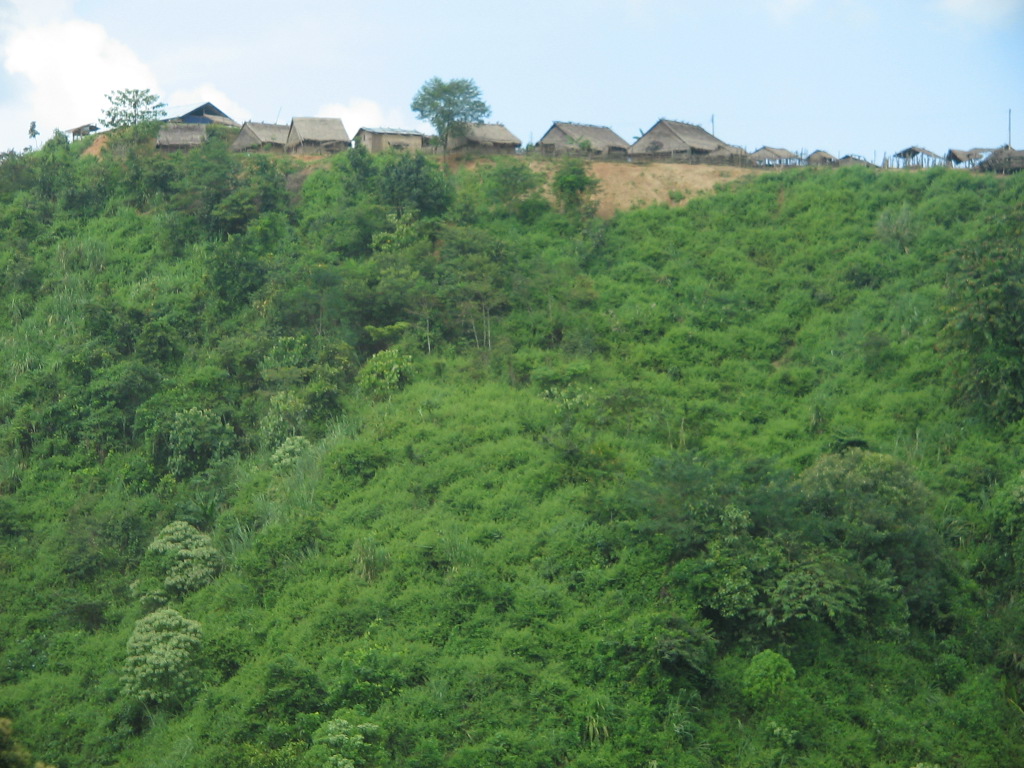
Every five to ten kilometers, we would pass through a tiny village. Thatched-roof houses were built right along the sides of the cliffs. A community water pump stood in the center of each village, and there we would see women washing clothes or children splashing. Mats covered with drying rice or chilies lay in the sunshine. Men, women, and children walked along the road, sometimes steeply uphill, with large bundles on their backs. Even though we were watching it all through the windows of a bus, I felt like we were visitors in another world. Upon a later reading of our guidebook, we learned that this area was "the heart of Hmong country" and the site of many rebel attacks over past decades. If there was one place in Laos I would love to have the chance to go back and explore, this would be it.

About halfway along the trip, the bus was passing through a lowland Lao village and suddenly swerved and hit a wagon. This resulted in a 3-hour delay, during which the three bus employees negotiated with the wagon owners, the police, and other interested locals. The tourists, meanwhile, wandered about and drank sodas. Finally, some money exchanged hands and we were free to leave again. We finished with the high mountain roads but continued to wind along lovely valleys and past tiny villages.

Pulling into the city of Vientianne at night was almost a letdown. We might have been traveling the main highway between two of Laos’s major cities, but it felt like the wilds of Southeast Asia to us.

[Most photos were taken through the windows of the bus, so please forgive any reflections or blurriness.]

Friday, November 10, 2006

Thoughts on the People of Luang Prabang


This is Chapter 6 of our Laos journey. There will be 8 chapters in all.

Our time in Laos was very short, and I don’t claim to be able to describe its peoples or cultures in any comprehensive way like I might about Thailand after being here nearly two years. However, we did make a number of interesting observations during our days in Luang Prabang.

Thailand, being 75% ethnic Thai (including Thai Lao) and 11% ethnic Chinese, has a relatively homogenous culture with some regional variation. National unity is strong, with few exceptions, and conformity is strongly valued. Other ethnic groups – particularly other southeast Asians – are often viewed with suspicion or even distaste.

In Laos, by contrast, only about 50% of the people are ethnic "Lao." The other half of the population is made up of more than 100 different ethnicities, including numerous Thai subgroups, hill tribes, Chinese, and Vietnamese. Although the groups are geographically separated, with the Lao primarily living in the flatter lowlands and other ethnic groups inhabiting the hills and mountains, society as a whole is much more mixed than in Thailand. During our short visit, we speculated that social conformity and unity are less important in Laos.

Economically, the people of Luang Prabang are at an interesting point. The city is geographically isolated – connected to other areas only by a small highway and the Mekong River. Tourism has brought about a recent boom, however, and entire streets and blocks are filled with guest houses and restaurants catering to foreigners. Although most of the city is still residential, it is obvious that tourism is rapidly increasing the living standards of a select group.

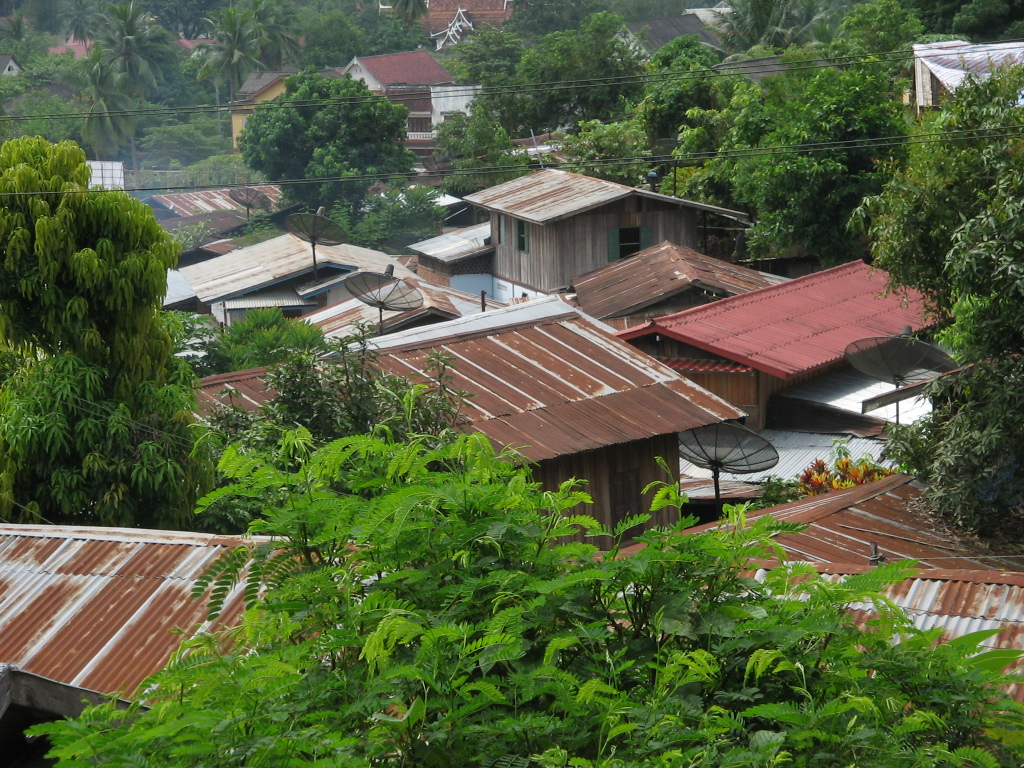
When we hiked up the hill in the middle of town, the path took us through a neighborhood of shabby houses and shacks. The people living there were clearly not wealthy, and their homes had few comforts. What nearly every house seemed to have, however, was a satellite dish. As we rose higher above the roofs of the neighborhood, we could see them poking up to the sky. What are they used for? As far as we could tell, to watch Thai TV. We saw many families watching Thai soap operas, commercials, and music shows. We even saw the Thai national anthem as it was played daily at 6pm.

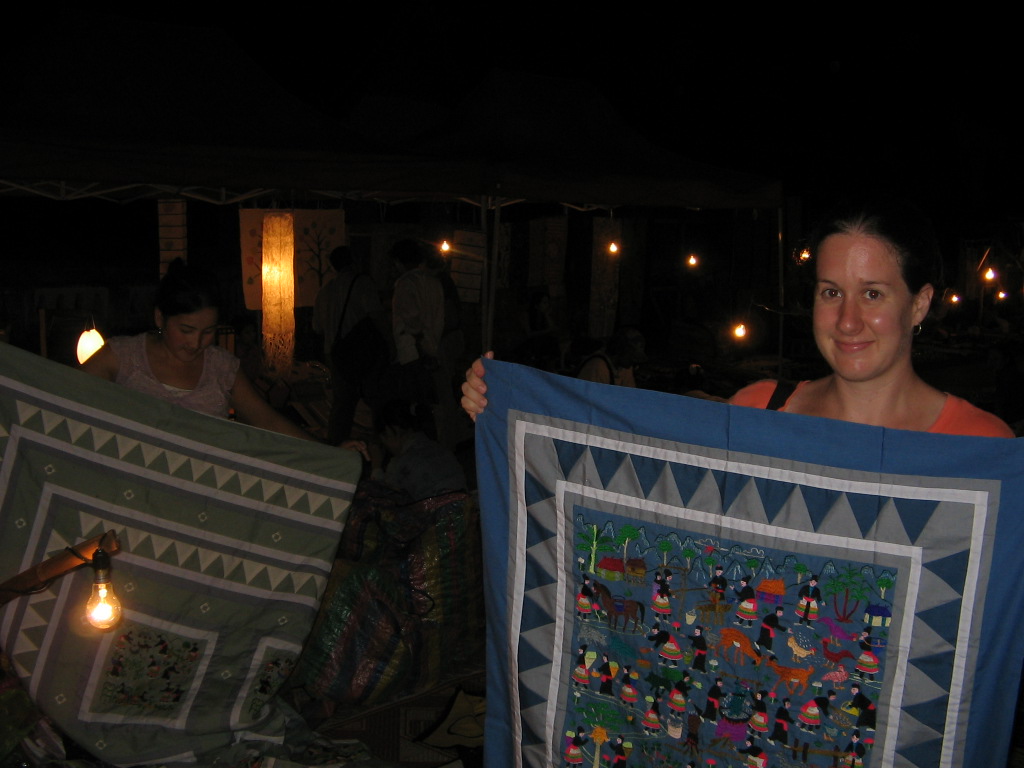
We were struck by the high cost of living in Laos as compared to Thailand. A plate of noodles that would cost 50 cents here was at least 75 cents there. At first we thought it was because we tourists and visiting mostly tourist areas. It became clear, though, that even the residents of Luang Prabang were paying the higher prices. We weren’t sure whether this was because tourism has inflated the prices of basic necessities, or because the isolation of the city means that those necessities are more scarce to begin with, though we were inclined to lean towards the latter explanation. By contrast, however, the price of souvenirs – silk scarves, hill tribe handicrafts, etc – was far cheaper than in Thailand. We were excited to make a few purchases for our future home in America!

Overall, our visit to Laos left us with many questions about its society and culture. I only wish we had more time to travel back and find some answers.


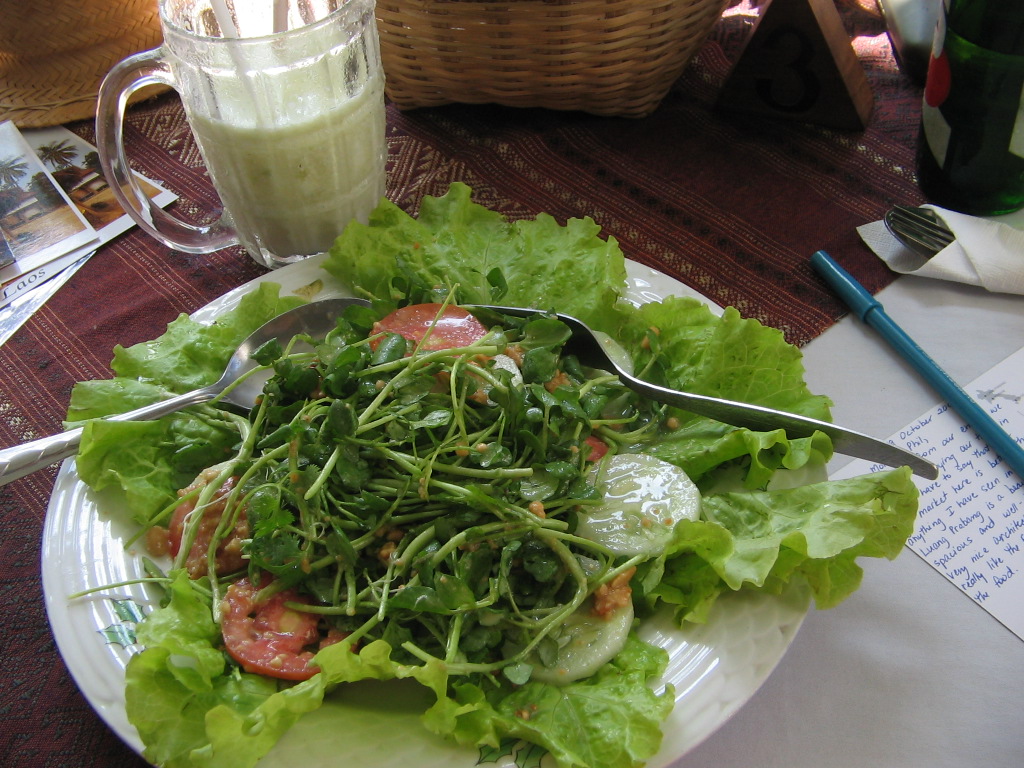
[The photo of the watercress salad is included to show more of the remarkably delicious local food – Lao with French influence – we were able to eat in Laos.]

Friday, November 03, 2006

Tourists in Luang Prabang


This is Chapter 5 of our Laos journey.

Luang Prabang, the former royal capital of Laos and a UNESCO World Heritage site, is set on the Mekong river and surrounded by wild mountains. French colonialism heavily influenced its architecture, and to our delight, its food as well. We had heard reports from other volunteers about its mellow avenues, riverside restaurants, tasty baguettes and strong coffee, and we had been looking forward to experiencing it all ourselves.

Our first evening, we dined on the river, enjoying a medley of local foods, sticky rice, and Beer Lao. A highlight of the meal was the "Salad Luang Prabang," made of watercress that grows along the river and a tangy dressing. We then retired to the Thavisouk Guest House, a pleasant place located in a residential area, away from the main tourist roads. We fell asleep feeling as though we were still floating along the brown waters of the Mekong.

Our two full days in Luang Prabang were spent strolling along its calm, clean, monk-filled streets and visiting a couple of temples. One site, That Chomsi, was situated high on a hill in the center of town. We walked up cool, shady paths, past old statues and stones, to find fantastic views from the top. The Royal Museum, with its gardens and art exhibits along with the usual treasures of an old kingdom, was another highlight. From time to time, we ran into fellow travelers from our two days on the boat, and one evening we dined with Ben & Young. Mostly, however, we just took our time . . . drinking fruit smoothies, writing postcards and journal entries, enjoying the feeling of not having to hurry anywhere or be "on duty" for anyone.

Aside from a few bumps, like Robert’s mild food poisoning that kept him from eating as many baguettes as I did over the course of the week and our realization that being tourists in Lampang was using more of our budget than expected, our days in Luang Prabang convinced us that travel as a twosome is something we ought to have more of in our future.

Tuesday, October 31, 2006

Mekong Slow Boat -- Day 2


This is Chapter 4 of our Laos journey.

We awoke early in Pak Beng after a fine night’s sleep to find that the river was literally underneath our window. We hadn’t noticed it the previous night in the dark. Fog was thick over the water and we watched as boat traffic started moving. After packing up, we walked outside and bought baguette sandwiches from stands along the road to last us through the day. Such luxury!

The second day on the slow boat passed much like the first, except that the scenery was even wilder and the seats more comfortable; due to engine trouble, we had been switched to another boat, much to our happiness. We spent many hours conversing with Young & Ben, a couple about our age who had been traveling through Southeast Asia for several months.

I continued to reflect on the small villages we passed on our way – their smallness, their evident poverty, and their isolation. I also began noticing the relatively large numbers of school-aged children present in the villages. It appeared that these kids were not attending classes of any sort. If they were dressed at all, it usually was not in a school uniform, and most of the villages looked too small to support a school anyway. In Thailand, the primary schools are often not much to speak of, but they do exist and most, if not all, kids attend. Seeing this different situation in Laos made me curious about other ways in which the two countries might differ, despite their physical closeness.

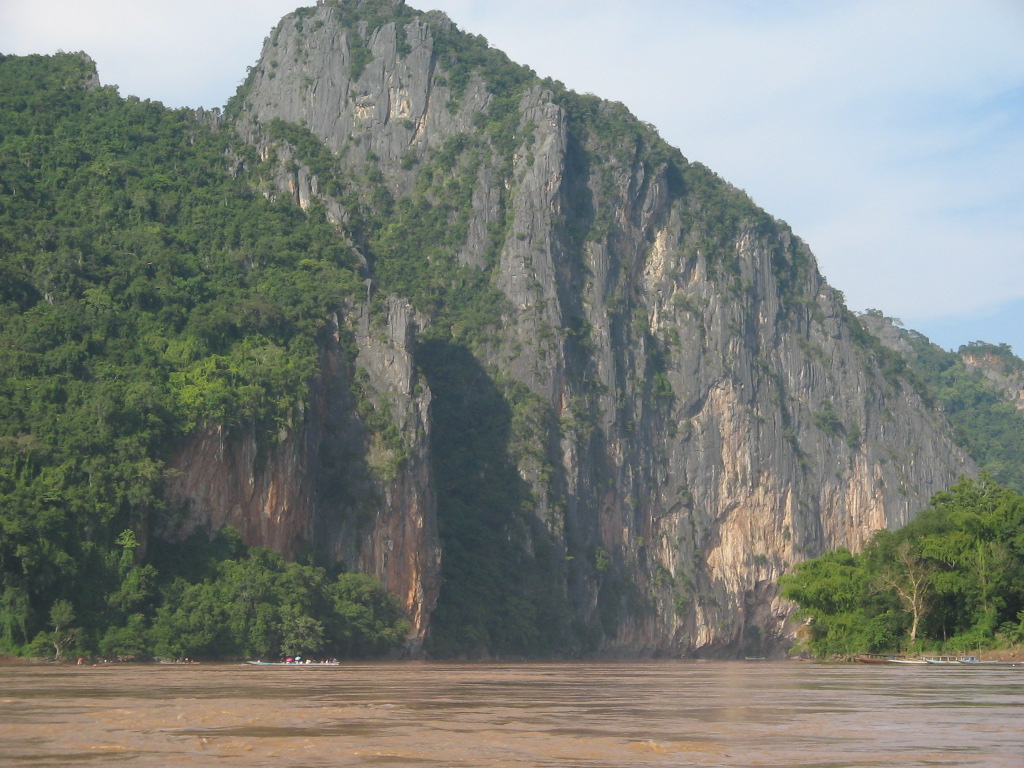
Shortly after 4pm, we turned a corner past some large cliffs and came to the town of Luang Prabang, the former capital of Laos. Although it had been a pleasant trip, we were glad to be off the boat at last and more than ready to settle in for a couple of days. We climbed into a tuk-tuk and headed off to our guest house.

Thursday, October 26, 2006

Mekong Slow Boat to Pak Beng


This is Chapter 3 of our Laos journey.

When Robert and I were planning our Laos vacation, we felt a bit guilty about sticking to "the beaten path." If you were to open the Lonely Planet Laos and read their suggested itinerary #1, you would find a nearly-exact description of our trip. Did this mean we would be missing out on the "real" Laos? Would we only see what had been specially tailored for tourists? Given our time and budget limits, though, it was the best choice for us. Besides, we rationalized, we’ve been living OFF the beaten path in Thailand for nearly two years now, so that must count for something. We were ready to be tourists for a change.

Nonetheless, we were taken aback as we watched our slow boat fill with North American and European backpackers. It got so full, in fact, that another boat had to be brought around, so that one could be filled too. Who were these people? Where did they get the time and money to sit on a boat in Laos for two days? (Were we not Peace Corps volunteers in Thailand, I’m quite sure we’d not have had the opportunity. There were, I should note, two other Peace Corps Thailand volunteers on the boat as well.) Had we come to Laos to see Laos, or to see Europe?

When you spend two days sitting on a small boat with the same group of people, though, you do get to know them some, and I will say that our fellow Mekong River travelers were a lively, yet friendly, bunch. They swapped travel plans and advice, looked at one another’s copies of the Lonely Planet, drank Beer Lao and saluted the fine scenery together. For our part, the daytime consumption of Beer Lao was out of our budget, but we did splurge on a package of Oreos when the boats pulled up to a tiny village and a family of vendors boarded with their baskets of goods. Yes, I ate Oreos on the Mekong River.

There were a few "real" Lao people on our boat, though, so occasionally we got the opportunity to dock at a village, usually a very small group of houses down close to the water, so they could get off. The houses themselves were a sight to see; made of rattan with a thatched roof, they were completely different from Thai houses. At each village, adults and children would hurry down to the water to look at the "farang" travelers and find out who was coming or going. There are no roads in this part of Laos, so the river traffic is their connection to the outside world.

Just as it was getting dark, we pulled into the town of Pak Beng for the night. We had been dreading Pak Beng, as I had read numerous blogs describing the bugs, rats, and drug pushers wandering its roads and guest houses. To our great surprise and delight, though, we immediately settled in at the Salika Guest House, which had screened windows, private bathrooms, and no rats anywhere, all for an affordable price. Amazed at our good fortune, we headed out to find food and ended up at Hasan Indian Restaurant, owned and operated by a nice young man from southern India. The food was good, and he spent a solid hour talking with us about what it was like being an Indian restaurant owner on the beaten path in Laos.

Feeling much pleased with ourselves for being such good travelers – surviving our first day on the wooden benches of the slow boat and the dark roads of Pak Beng – we retired to our room for a good night’s sleep.

Wednesday, October 25, 2006

Robert and Sid Ficious Toast Ian in Honor of his Birthday Month

Huay Xai


This is Chapter 2 of our Laos journey.

The small town of Huay Xai on the Mekong River was our introduction to Laos, and we were immediately enchanted. After buying our visas, we walked up the hill and through town to the Aramid Guest House (a fine place to stay). "This feels different from Thailand," said Robert. "This feels a lot like Thailand, but calmer," I replied. "Nobody is shouting at us."

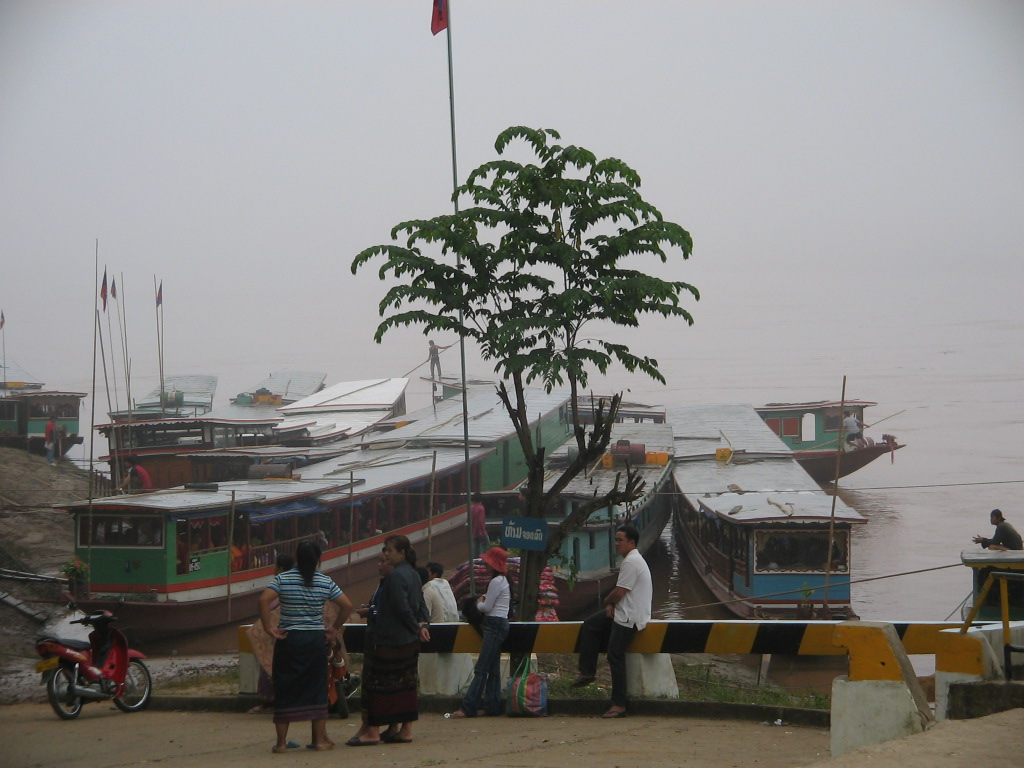
At the recommendation of the enthusiastic owner of the Aramid, we walked down to the slow boat landing for dinner overlooking the water. Seated at a table above the river, we watched as boats loaded and unloaded. A group of tourists arrived and trudged up the hill with their backpacks. Families watched the activities. Women bathed on the front of the boats, wearing sarongs – some families use the boats as both home and workplace. Joined by Sid Ficious, we took our first taste of Beer Lao and became instant fans. Robert ordered fish laab, I ordered stir-fried vegetables, and we shared both dishes with sticky rice. The sun slowly set on our first evening in Laos.

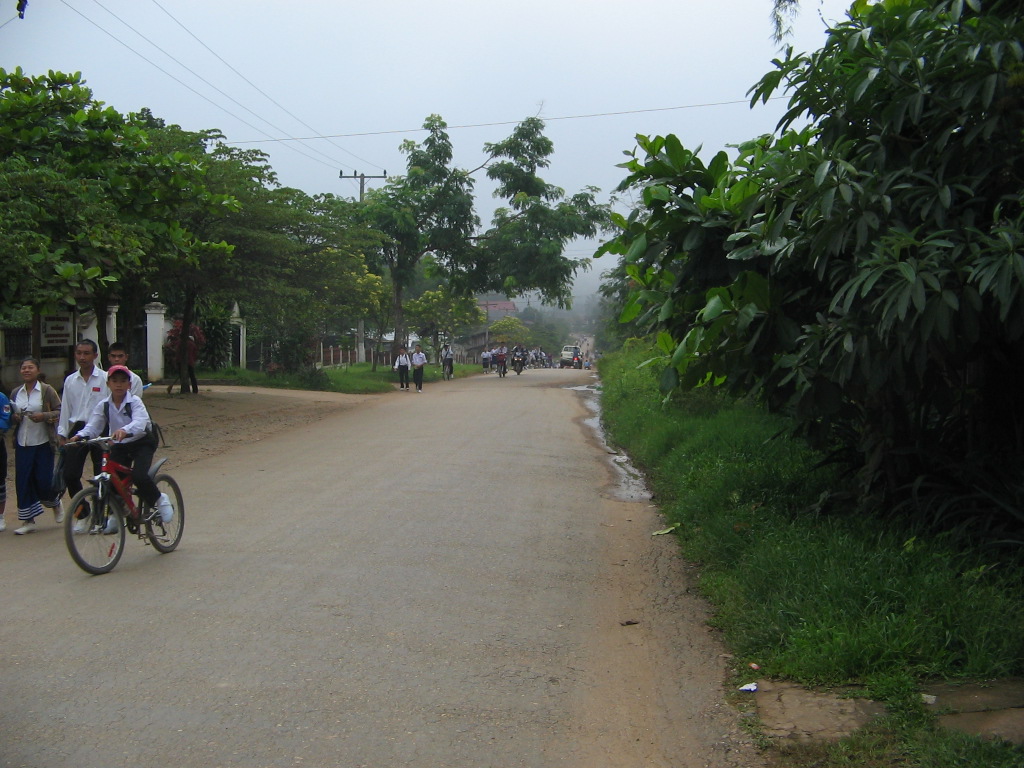
We had heard many rumors about the presence of overwhelming numbers of French baguettes in Laos, due to its colonial legacy, and we were eagerly anticipating them in the weeks leading up to our trip. In the morning at the Aramid, we were not disappointed: the wife of the owner made us fantastic "omelette sandwiches," the likes of which we’ve never had in Thailand. Well-fortified, we hoisted our backpacks once again and walked back to the slow boat landing, sharing the road with hundreds of students walking and riding bicycles to school.

Morning on the Mekong is foggy; we couldn’t see across to Thailand when we arrived, but as we waited nearly four hours for our boat to leave, it became visible. We were entertained by watching the continuing loading of the boats, including the transfer of hundreds of crates of Beer Lao between land and water. We also bought several more baguettes for snacking during the day. In the ticket office, Robert snapped a photo of some flags showing our location.

When a horde of other "farang" backpackers arrived from Thailand around noon, we settled ourselves onto the boat and got ready to depart Huay Xai.

Tuesday, October 24, 2006

To the Mekong


I’ve decided to write about our journey through Laos as a series of blog entries over the next ten days or so. There is so much to say, and so many photos to show. I’ll start first off, though, by saying that it was a fantastic trip – despite tiredness, upset stomachs, bus breakdowns (plural), and many hours long hours logged on various transport. I only wish we had had more time. I would gladly return, and recommend it to anyone who is considering making the trip.

Today I’ll give a brief summary of the first leg of our journey: from our house to Huay Xai, Laos. We left our house at the early hour of 8:45am and walked two blocks to a basketball court, where we boarded an ordinary, non-airconditioned bus that took us, over the course of many hours, all the way to Chiang Rai – the northernmost province in Thailand. The bus ride from our house north was a fantastic experience itself – we had never ridden in that direction before, and we got to see new places in our own district. Chiang Rai is beautiful – higher mountains, well-tended rice fields, cultivated hillsides. We spent one night in the city there and then took another scenic 3-hour bus ride to Chiang Khong the following day. Chiang Khong is one of the places where foreigners can cross the border – the Mekong River – from Thailand into Laos.

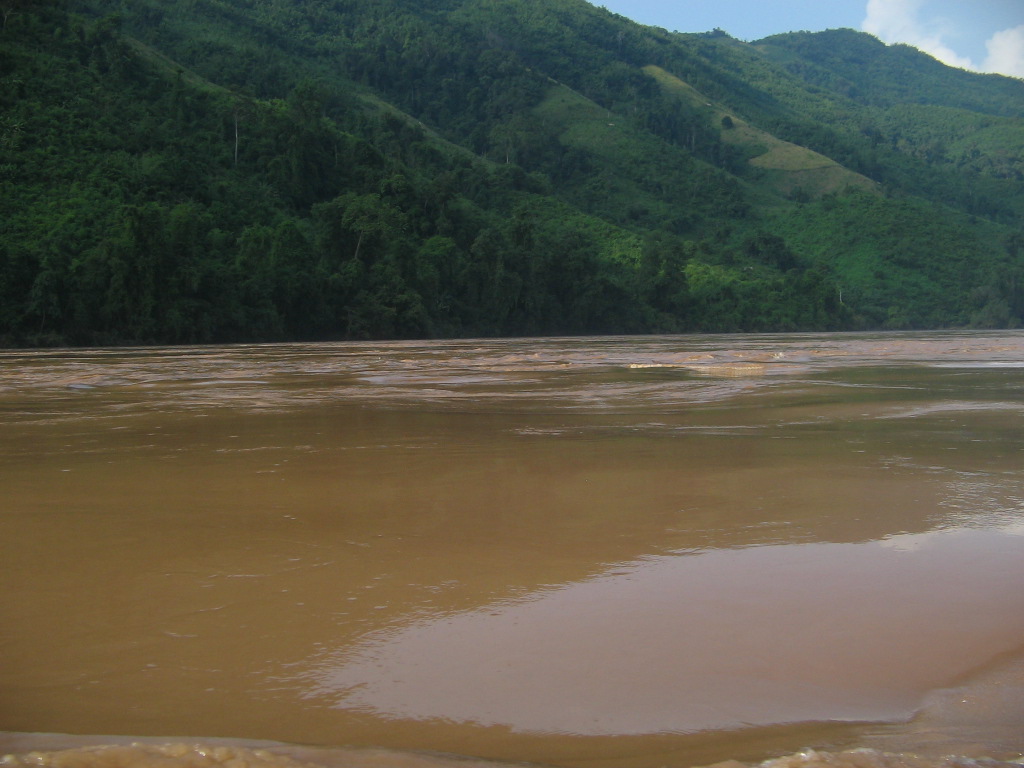
The Mekong impressed us at first sight. It was big, brown, and fast moving. We watched little boats fighting against the current as they made their way back and forth. Even the bigger boats seemed to have to work pretty hard. Laos, on the other side, looked green and lovely.

From Chiang Khong, we took a tiny river ferry across to Huay Xai, Laos. When I say tiny, I mean that it could only hold a few people, and we were just a couple of inches above the water! I spent the 10-minute journey shaking as I snapped a few photos and tried not to tip much to one side or the other.

We arrived in Huay Xai, paid what felt like an exorbitant fee for a visa (we’re Peace Corps volunteers, after all), and headed up the hill into town.

[The photos, mysteriously out of the order I tried to arrange, show the following: our bus to Chiang Mai, Robert standing on the Thai side of the river, a fish pal crossing on the little boat, and our arrival at Lao immigration.]

Tuesday, October 17, 2006

Hello from Laos

Robert and I are sitting in an internet cafe in Luang Prabang, Laos. I wanted to have a post on my blog from Laos, because I think it's cool!

We are big fans of Laos. I'll give more details about why, and some photos, next week when we return to Thailand. In the meantime, imagine us visiting historic temples and eating lots of baguettes.